
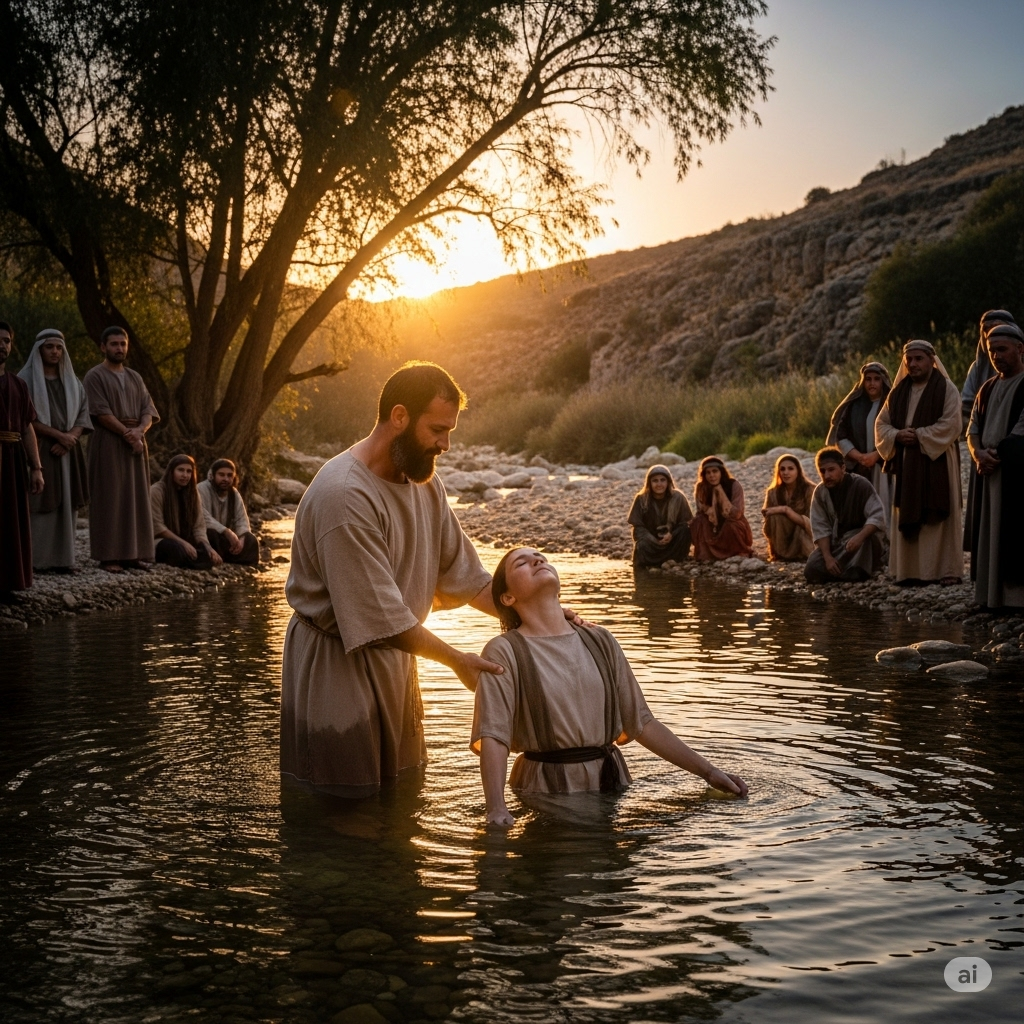
Baptism in the name of the Father, the Son and of the Holy Spirit.
Therefore go and make disciples of all nations, baptizing them in the name of the Father and of the Son and of the Holy Spirit, and teaching them to obey everything I have commanded you. And surely I am with you always, to the very end of the age. Matthew 28:19-20, NIV
Baptism is one of the most profound commands given by Jesus, symbolizing spiritual rebirth, cleansing from sin, and entry into the covenant relationship with God. When Jesus instructed His disciples to baptize “in the name of the Father and of the Son and of the Holy Spirit,” the word “name” (Greek: onoma) goes far deeper than a mere set of letters or a spoken formula. In Scripture, “name” represents the character, authority, and reality of a person (see Proverbs 22:1, John 17:6).
Thus, baptism in the Triune “name” means being immersed into the very life and reality of the Father, the Son, and the Holy Spirit. It is covenantal, relational, and transformational.
1. Baptism in the Name of the Father: Adoption into His Family
To be baptized in the name of the Father is to acknowledge God as Creator, Sovereign, and loving Father. It is more than turning away from sin; it is turning towards Him, submitting to His authority and receiving adoption as His child.
- Romans 8:15 – “The Spirit you received brought about your adoption to sonship. And by him we cry, ‘Abba, Father.’”
- Ephesians 4:6 – “One God and Father of all, who is over all and through all and in all.”
Baptism into the Father’s name means being welcomed into His household, embracing His fatherly care, and yielding to His guidance.
2. Baptism in the Name of the Son: Union with Christ’s Death and Resurrection
Baptism in the name of the Son identifies the believer with Jesus Christ’s death, burial, and resurrection. It proclaims that our old life of sin is crucified with Christ, and through faith in Him, we rise to new life.
- Romans 6:3–4 – “All of us who were baptized into Christ Jesus were baptized into his death… so that, just as Christ was raised from the dead… we too may live a new life.”
- Galatians 3:27 – “For all of you who were baptized into Christ have clothed yourselves with Christ.”
This baptism emphasizes that salvation is not achieved by human effort but by Christ’s finished work. To be baptized in the Son’s name is to accept His lordship, partake in His grace, and live as one clothed in His righteousness.
3. Baptism in the Name of the Holy Spirit: Empowerment for New Life
Baptism in the name of the Holy Spirit brings transformation and empowerment. Through the Spirit’s indwelling, believers are regenerated, sanctified, and enabled to walk in obedience and bear fruit.
- John 3:5–6 – “No one can enter the kingdom of God unless they are born of water and the Spirit.”
- Acts 1:8 – “But you will receive power when the Holy Spirit comes on you; and you will be my witnesses…”
- Galatians 5:22–23 – The Spirit produces fruit—love, joy, peace, patience, kindness, goodness, faithfulness, gentleness, and self-control.
Without the Spirit’s presence, Christian life would be powerless and self-driven. Baptism in His name marks a new beginning where God Himself lives within us, guiding, strengthening, and transforming us.
4. The Unity of Baptism in the Triune Name
The threefold baptism is not about reciting titles but entering into the fullness of the Triune God:
- In the Father’s name → adoption into His family and submission to His will.
- In the Son’s name → union with His saving death and resurrection.
- In the Spirit’s name → empowerment to live a new, holy, and fruitful life.
As Acts 19:1–5 shows, true baptism is not incomplete or partial—it immerses the believer into the reality, character, and authority of Father, Son, and Spirit together.
Conclusion: Beyond Words into Reality
When Jesus commanded baptism “in the name…” He was not teaching a formula of words, but inviting believers into a covenantal immersion into God’s character, essence, and authority.
- It is not merely about the letters in the names but about the living reality of the persons of the Trinity.
- Baptism is a declaration of belonging to the Father, salvation in the Son, and empowerment by the Spirit.
- It marks the beginning of a new life where the fullness of God dwells with and within the believer.
Therefore, baptism in the name of the Father, Son, and Holy Spirit is the believer’s entrance into the true life of God Himself.
Baptism is not just a ritual; it’s a declaration of faith, an entry into a covenant with God, and an empowerment to live a new life in Christ. As demonstrated in Acts 19:1-5, Christian baptism is a complete experience of the Triune God—Father, Son, and Holy Spirit—bringing the believer into full fellowship with God and transforming them to reflect His glory to the world. And “name’ does not refer to the word that you see with the letters in it , the name refers to its essence, character and authority.