
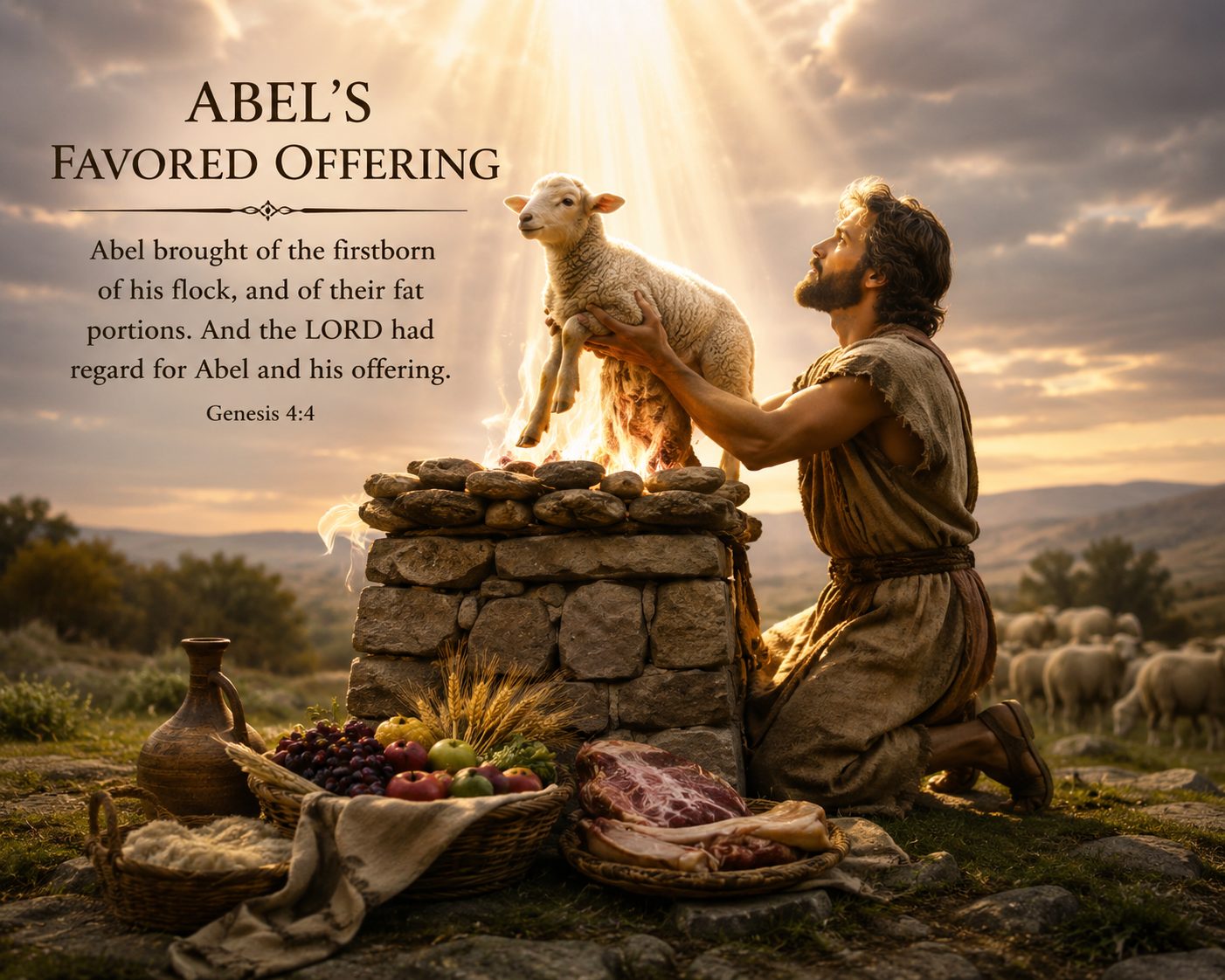
Introduction: Understanding God’s Favor Through Cain and Abel
The story of Cain and Abel in Genesis 4 is one of the earliest and most powerful lessons in the Bible about worship, the human heart, sin, mercy, and God’s favor. Many people read this story and ask, “Why did God favor Abel and not Cain?” Was God being unfair? Did God simply love one brother more than the other?
The biblical answer is no. God’s favor is never random, cruel, or unjust. The story of Cain and Abel shows us that God sees beyond outward actions. He sees the heart. He desires faith, sincerity, humility, and obedience. Yet even when Cain failed, God still showed mercy by warning him before sin destroyed him.
This story is not only about two brothers and two offerings. It is about the kind of heart that receives God’s favor and the grace of God that calls sinners back before they fall deeper into darkness.
The Story of Cain and Abel in Genesis 4
Genesis 4 tells us that Cain was a worker of the ground, while Abel was a keeper of sheep. In time, both brothers brought an offering to the Lord.
Cain brought an offering from the fruit of the ground. Abel brought from the firstborn of his flock and from their fat portions. Then Scripture says:
“And the Lord had regard for Abel and his offering, but for Cain and his offering he had no regard.”
— Genesis 4:4–5
This moment raises an important spiritual question: What made Abel’s offering acceptable to God?
The Bible gives us clues. Abel brought the firstborn and the best portions. His offering reflected honor, faith, and reverence. Cain brought an offering, but the text does not describe it with the same sense of devotion or excellence.
God was not merely looking at the material gift. He was looking at the heart behind the gift.
God’s Favor Is Not Favoritism
One of the most important truths in this story is that God’s favor is not the same as human favoritism. Human favoritism is often unfair, selfish, and based on outward appearance. But God’s favor is holy, righteous, and rooted in truth.
God did not reject Cain because He hated him. God did not favor Abel because He was being partial. God responded to the faith and heart behind Abel’s worship.
The Bible teaches that God looks deeper than man looks:
“For the Lord sees not as man sees: man looks on the outward appearance, but the Lord looks on the heart.”
— 1 Samuel 16:7
This principle helps us understand Genesis 4. Cain and Abel both brought something to God, but God saw what was happening within them. Abel’s offering came from faith. Cain’s response revealed anger, pride, and jealousy.
Abel’s Offering Was Given by Faith
The New Testament gives us a clear interpretation of Abel’s offering:
“By faith Abel offered to God a more acceptable sacrifice than Cain.”
— Hebrews 11:4
This verse is key. Abel’s offering was acceptable because it was given by faith. He did not simply perform a religious act. He came to God with trust, reverence, and a heart of worship.
Faith matters to God. Worship without faith becomes empty religion. Giving without love becomes performance. Sacrifice without humility loses its spiritual meaning.
Abel’s offering teaches us that God’s favor rests not merely on what we bring, but on how we come before Him.
Cain’s Problem Was Revealed by His Reaction
After God did not regard Cain’s offering, Cain became angry and his face fell. But God did not immediately abandon Cain. Instead, God spoke to him:
“Why are you angry, and why has your face fallen? If you do well, will you not be accepted?”
— Genesis 4:6–7
This is a beautiful picture of God’s mercy. God corrected Cain, but He also invited him to repentance. God was telling Cain that acceptance was still possible. The door was not closed.
God’s favor was not impossible for Cain. Cain was not rejected forever at that moment. God gave him a warning and a way back.
Then God said:
“Sin is crouching at the door. Its desire is contrary to you, but you must rule over it.”
— Genesis 4:7
This shows the grace and mercy of God. Before Cain murdered Abel, God warned him. Before sin fully consumed him, God spoke to him. Before Cain crossed the line into violence, God called him to master the sin rising in his heart.
God’s favor does not mean God ignores sin. God’s mercy means He warns us before sin destroys us.
God’s Favor Begins With the Heart
The Cain and Abel story teaches that God is not impressed by outward religion if the heart is far from Him. Cain brought an offering, but his anger showed that his heart was not surrendered.
This is a message repeated throughout Scripture. God desires obedience more than empty sacrifice. He desires mercy, humility, and truth in the inward parts.
David later wrote:
“The sacrifices of God are a broken spirit; a broken and contrite heart, O God, you will not despise.”
— Psalm 51:17
God’s favor is not earned by religious appearance. It is received by faith, humility, and surrender. Abel’s worship came from a heart that honored God. Cain’s worship was followed by resentment when he did not receive the response he wanted.
This warns us today: we must not only bring something to God; we must bring ourselves to God.
God’s Mercy Toward Cain
Even after Cain killed Abel, God still spoke to him. Cain deserved judgment, yet God showed mercy even in judgment. Cain was punished, but he was also protected with a mark so that others would not kill him.
This is a powerful reminder that God’s mercy is present even when humanity falls into terrible sin. God is holy and just, but He is also merciful and gracious.
The story of Cain does not show a God who is eager to destroy. It shows a God who warns, corrects, questions, exposes sin, and still preserves life.
God’s mercy does not excuse sin, but it gives sinners space to repent.
What the Cain and Abel Story Teaches About God’s Favor
The story teaches several biblical truths about God’s favor.
First, God’s favor is connected to faith. Abel’s offering was accepted because it was offered by faith.
Second, God’s favor is connected to the heart. God saw the difference between Abel’s worship and Cain’s attitude.
Third, God’s favor is not favoritism. God is righteous and just in all His ways.
Fourth, God’s favor does not mean life will be free from suffering. Abel was favored by God, yet he suffered at the hands of his brother. Favor does not always mean earthly comfort. Sometimes favor means being righteous before God even in a broken world.
Fifth, God’s mercy reaches even the guilty. Cain sinned grievously, but God still spoke to him, warned him, judged him, and preserved his life.
The Greater Message: Grace Through Jesus Christ
The story of Cain and Abel points us to a greater truth fulfilled in Jesus Christ. Abel’s blood cried out from the ground after his murder. But the New Testament tells us that the blood of Jesus speaks a better word.
“The sprinkled blood that speaks a better word than the blood of Abel.”
— Hebrews 12:24
Abel’s blood cried for justice. Jesus’ blood speaks mercy, forgiveness, and redemption.
This is the fullness of God’s favor: not that we are perfect, but that through Christ, sinners can be forgiven, restored, and accepted by God. God’s favor is ultimately revealed in His grace through Jesus.
We do not receive God’s favor because we are worthy in ourselves. We receive grace because God is loving, merciful, and faithful.
How We Should Respond to God’s Favor
The story of Cain and Abel calls us to examine our hearts.
Are we worshiping God by faith or merely going through religious motions?
Are we giving God our best or only what is convenient?
Do we respond to correction with humility or anger?
Do we rejoice when others are blessed, or do we become jealous?
Do we master sin by God’s grace, or do we let resentment rule us?
God’s favor is not about competing with others. Abel did not need to defeat Cain to be accepted by God. Cain did not need to destroy Abel to find acceptance. God had already told Cain, “If you do well, will you not be accepted?”
This means there was mercy available. There was a path back. There was grace calling him to repentance.
Conclusion: God’s Favor Is Rooted in Grace, Mercy, and Truth
The Cain and Abel story is not merely a story of rejection and judgment. It is a story that reveals the heart of God. God favors faith, sincerity, humility, and obedience. He does not delight in empty offerings or religious performance without a surrendered heart.
Yet God is also merciful. He warned Cain before sin overtook him. He gave Cain the opportunity to do what was right. Even after Cain sinned, God still dealt with him personally.
God’s favor is holy, not shallow. God’s mercy is real, not weak. God’s grace is powerful, not cheap.
Through Abel, we learn that God honors faith. Through Cain, we learn that God warns sinners in mercy. Through Jesus Christ, we learn that God’s greatest favor is found in His saving grace.
The message of Genesis 4 is clear: God looks at the heart, calls us away from sin, and invites us to come to Him by faith. His favor is not earned by appearance, but received through humble trust, sincere worship, and the grace He freely gives.
Prayer
Lord God, thank You for Your mercy, grace, and favor. Give me a heart like Abel, a heart that worships You by faith and offers You the best of my life. Keep me from jealousy, pride, anger, and hidden sin. When You correct me, help me respond with humility. Teach me to walk in Your favor through faith, obedience, and trust in Jesus Christ. Amen.