
The Law and Grace: Understanding God’s Plan for Gentile Christians
Introduction
One of the most common questions Christians ask is: If Jesus said He did not come to abolish the Law, are we still required to follow the Old Testament commands? (Matthew 5:17). This question becomes especially difficult for Gentile believers who were never part of Israel’s covenant but still read about the Ten Commandments, food laws, and sacrificial systems in the Old Testament.
The Bible’s answer is not contradictory, but it does require careful study. God’s plan of redemption unfolds from the Law through Grace, fulfilled in Jesus Christ. Let’s walk through it step by step.
1. The Purpose of the Law
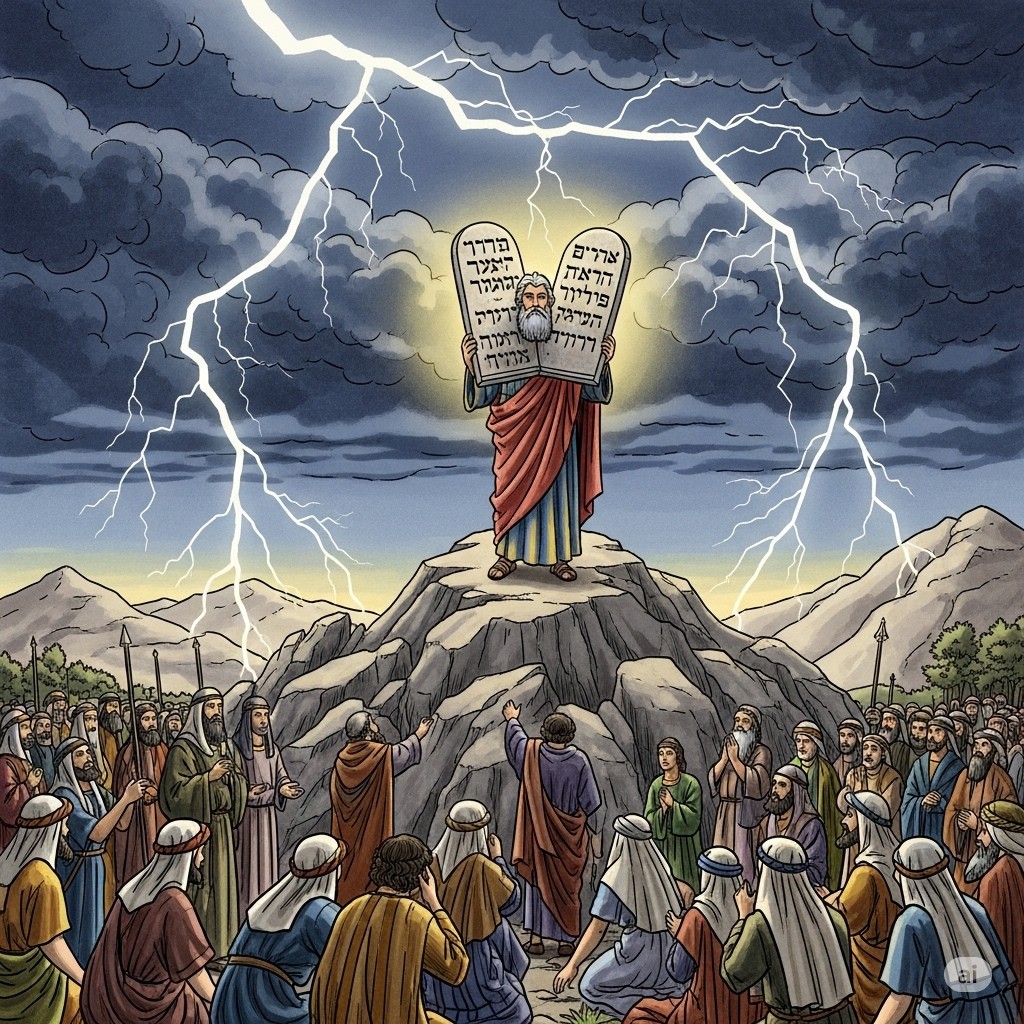
God gave the Law (Torah) to Israel through Moses at Mount Sinai. It was holy, righteous, and good (Romans 7:12). But why was it given?
- To reveal God’s holiness (Leviticus 19:2).
- To expose human sin (Romans 3:20).
- To prepare for Christ as a tutor or guardian (Galatians 3:24).
- To govern Israel as their civil, ceremonial, and moral code.
The Law was a mirror to reveal sin, but not the soap to cleanse it. It showed the need for a Savior but could not save.
2. Jesus and the Fulfillment of the Law
Jesus said:
“Do not think that I have come to abolish the Law or the Prophets; I have not come to abolish them but to fulfill them.” (Matthew 5:17)
To “fulfill” means:
- Jesus kept the Law perfectly (Hebrews 4:15).
- He fulfilled the sacrificial system as the final offering for sin (John 1:29).
- He embodied the righteousness of the Law in His life and teaching.
- He brought the Law to its intended goal—to point to Himself.
Thus, the Law still matters—but not as a covenant to obey for salvation. Its goal was always to lead us to Christ.
3. The New Covenant of Grace
Through Jesus, God established a new covenant:
“For by grace you have been saved through faith. And this is not your own doing; it is the gift of God—not by works, so that no one may boast.” (Ephesians 2:8–9)
Paul explains the contrast:
- Law demanded obedience but exposed weakness.
- Grace forgives sin and gives the Holy Spirit to empower righteousness.
“For God has done what the law, weakened by the flesh, could not do… in order that the righteous requirement of the law might be fulfilled in us, who walk not according to the flesh but according to the Spirit.” (Romans 8:3–4)
Grace doesn’t ignore sin; it redeems us from sin and empowers us to live in holiness.
4. Are Gentile Christians Under the Law?
The Mosaic Law was given to Israel (Deuteronomy 4:8; Psalm 147:19–20). Gentiles were never part of that covenant.
When Gentiles began joining the church, the apostles discussed whether they should obey the Law of Moses. The Jerusalem Council ruled:
“It seemed good to the Holy Spirit and to us not to burden you with anything beyond the following requirements: abstain from food sacrificed to idols, from blood, from meat of strangled animals, and from sexual immorality.” (Acts 15:28–29)
This shows:
- Gentiles are not bound to the full Torah.
- They are called to holiness and love, but not to Jewish ceremonial or dietary laws.
5. The Law of Christ
While not under the Mosaic Law, Christians are under the Law of Christ (Galatians 6:2), summarized by love:
“Love the Lord your God with all your heart… and love your neighbor as yourself. All the Law and the Prophets hang on these two commandments.” (Matthew 22:37–40)
- Moral principles (e.g., do not murder, do not steal, do not commit adultery) remain binding because they reflect God’s character.
- Ceremonial and sacrificial laws were fulfilled in Christ and no longer apply.
- Civil laws governed Israel’s theocracy and are not binding for the church.
6. Apparent Contradictions Explained
Some verses seem to contradict this teaching, but they harmonize when understood in context:
| Verse | At First Glance | Context / True Meaning |
|---|---|---|
| Matthew 5:19 – “Anyone who sets aside one of the least of these commands…” | Suggests all laws must still be kept. | Spoken before Christ’s death and resurrection. The Law stood until fulfilled at the cross (Hebrews 9:15). |
| Romans 3:31 – “We uphold the law.” | Faith doesn’t cancel Law-keeping. | Faith fulfills the Law’s true intent: righteousness through Christ. |
| James 2:24 – “A person is justified by works, not by faith alone.” | Salvation by works? | James speaks of works as proof of genuine faith, not as the basis of salvation. Paul and James agree. |
| Romans 6:14 – “You are not under law but under grace.” | No obligation to holiness? | Paul is freeing believers from Law as a covenant, not from God’s moral will. |
| Colossians 2:16–17 – “Do not let anyone judge you by a Sabbath or festival…” | Christians can ignore all commands? | Paul teaches that ceremonial laws were shadows fulfilled in Christ. Moral obedience remains. |
7. Why This Matters for Christians Today
- Avoid legalism – Salvation does not come from Torah-keeping.
- Avoid license – Grace is not permission to sin.
- Live by the Spirit – The Spirit empowers believers to fulfill the righteousness the Law demanded (Romans 8:4).
- Walk in love – Love fulfills the Law (Romans 13:10).
Conclusion
The Law was God’s gift to Israel, revealing His holiness and exposing sin. Jesus fulfilled the Law, establishing a new covenant of grace. Gentile Christians are not under the Mosaic Law but under the Law of Christ—living in love, empowered by the Spirit.
“For Christ is the end of the law for righteousness to everyone who believes.” (Romans 10:4)
The Law prepared the way. Grace completes it. And now, in Christ, both Jews and Gentiles stand redeemed—not by works of the Law, but by faith in the One who fulfilled it perfectly.
| The Law (Old Covenant) | Grace (New Covenant in Christ) |
|---|---|
| Given through Moses (John 1:17) | Given through Jesus Christ (John 1:17) |
| Written on stone tablets (Exodus 31:18) | Written on hearts by the Spirit (2 Corinthians 3:3) |
| Reveals sin but cannot save (Romans 3:20) | Forgives sin and saves (Ephesians 2:8–9) |
| Demands righteousness but gives no power (Galatians 3:10) | Provides righteousness and Spirit’s power (Romans 8:3–4) |
| Leads to condemnation (2 Corinthians 3:7) | Leads to justification and life (Romans 5:18) |
| Shadow of things to come (Colossians 2:16–17) | Reality found in Christ (Colossians 2:17) |
| For Israel under the Old Covenant | For all nations through faith in Christ (Galatians 3:28) |
| Focus: “Do this and live” | Focus: “Believe and live” |