
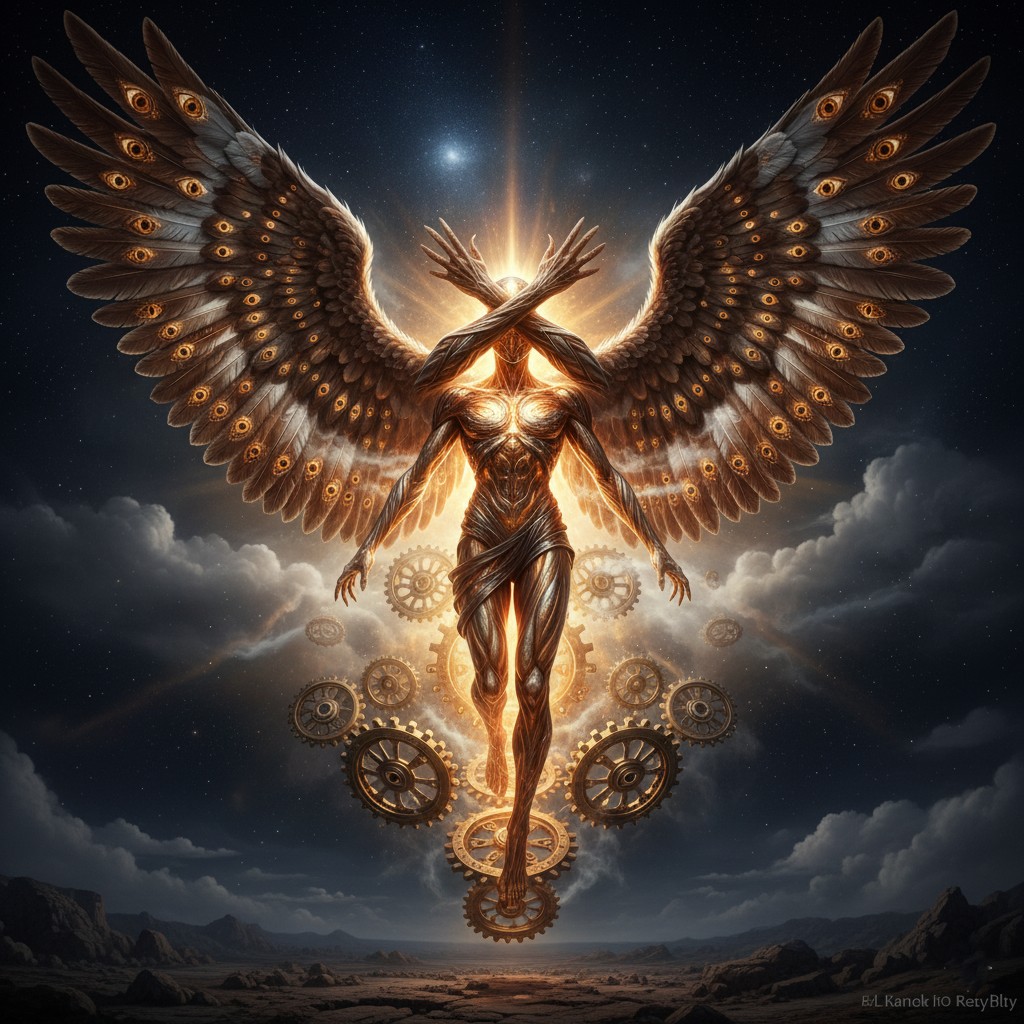
Angels: A Biblical Perspective
Angels occupy a central place in the biblical worldview. They appear from Genesis to Revelation as spiritual beings created by God, serving both in His heavenly court and in His dealings with humanity. The Bible also reveals that not all angels remained faithful; some fell into rebellion and became known as demons or unclean spirits. To understand their nature, purpose, and destiny, we turn to the Scriptures and the original meanings of the words used to describe them.
1. Creation of Angels
Angels are created beings, not eternal in themselves. They were made by God before the creation of mankind and the material world.
- Colossians 1:16 — “For by Him all things were created, in heaven and on earth, visible and invisible, whether thrones or dominions or rulers or authorities—all things were created through Him and for Him.”
- Psalm 148:2, 5 — “Praise him, all his angels; praise him, all his hosts!… Let them praise the name of the LORD! For he commanded and they were created.”
In Hebrew, the word מַלְאָךְ (mal’āk) means “messenger,” while in Greek ἄγγελος (ángelos) carries the same meaning. Their identity is tied to their role as servants and messengers of God.
2. Purpose of Angels
The primary purpose of angels is to serve God and to carry out His will among both heaven and earth.
- Hebrews 1:14 — “Are they not all ministering spirits sent out to serve for the sake of those who are to inherit salvation?”
- Psalm 103:20–21 — “Bless the LORD, O you his angels, you mighty ones who do his word, obeying the voice of his word!”
Angels are God’s servants, worshippers, and messengers. They minister to believers, execute divine judgment, protect God’s people, and continuously praise His holiness.
3. Nature of Angels
Unlike humans, angels are purely spiritual beings (πνεύματα pneúmata). They do not possess mortal flesh, and Jesus taught they do not marry or die.
- Luke 20:36 — “For they cannot die anymore, because they are equal to angels and are sons of God, being sons of the resurrection.”
Thus, angels are immortal by nature of being spirit, though not eternal in origin—they are sustained by God’s power.
4. Fallen Angels and the Devil
Not all angels remained loyal. Some chose rebellion, following Satan, who was himself a created angelic being who became proud.
- Isaiah 14:12–15 (symbolically describes the fall of “Lucifer,” meaning “shining one”).
- Ezekiel 28:14–17 (a lament over the king of Tyre, often understood to parallel Satan’s prideful fall).
- Revelation 12:7–9 — “Now war arose in heaven, Michael and his angels fighting against the dragon. And the dragon and his angels fought back, but he was defeated… and the great dragon was thrown down, that ancient serpent, who is called the devil and Satan, the deceiver of the whole world.”
These fallen angels are what Scripture often calls demons (δαιμόνια daimónia). They oppose God’s purposes, deceive nations, and afflict humans (Mark 5:1–13; 1 Timothy 4:1).
5. The Devil’s Work and the Fallen Angels’ Influence
The devil (διάβολος diábolos, meaning “slanderer” or “accuser”) is portrayed as the leader of the fallen angels. He is called the “god of this age” (2 Corinthians 4:4) and the “ruler of the power of the air” (Ephesians 2:2).
- They tempt humans (Genesis 3:1–6; Matthew 4:1–11).
- They oppose God’s people (1 Peter 5:8; Revelation 12:17).
- They influence nations and systems (Daniel 10:13, 20).
Unlike holy angels who minister for salvation, demons bring deception, destruction, and bondage.
6. Angels Compared to Humans
Humans are created “in the image of God” (Genesis 1:27), a privilege not said of angels. Angels are greater in might and power (2 Peter 2:11), but humans hold a unique destiny: to be redeemed by Christ and raised in glory.
- Hebrews 2:6–7 — Humans were made “a little lower than the angels” yet destined for glory and honor through Christ.
- Unlike angels, humans can experience salvation through Christ’s blood (Hebrews 2:16). Angels observe this redemption but do not share in it (1 Peter 1:12).
7. Do Angels Die or Perish?
Unlike humans, angels do not die. Jesus Himself confirmed that angels do not undergo death (Luke 20:36). Their spiritual essence means they are not subject to decay.
- Spirits do not perish as flesh does (Ecclesiastes 12:7).
- Angels’ existence continues eternally, though their destiny differs depending on loyalty to God.
8. God’s Judgment on Fallen Angels
Fallen angels face inevitable judgment.
- 2 Peter 2:4 — “For if God did not spare angels when they sinned, but cast them into hell [Tartarus] and committed them to chains of gloomy darkness to be kept until the judgment…”
- Jude 6 — “The angels who did not stay within their own position of authority, but left their proper dwelling, he has kept in eternal chains under gloomy darkness until the judgment of the great day.”
Their fate is sealed: eternal punishment.
- Matthew 25:41 — “Depart from me, you cursed, into the eternal fire prepared for the devil and his angels.”
- Revelation 20:10 — “And the devil who had deceived them was thrown into the lake of fire and sulfur where the beast and the false prophet were, and they will be tormented day and night forever and ever.”
This confirms that fallen angels are not annihilated, but endure everlasting conscious torment.
9. Eternal State of Holy Angels
In contrast, the angels who remained faithful continue forever in God’s presence. They worship without ceasing (Revelation 5:11–12) and serve Him in the consummated kingdom (Revelation 21:9, 22:8–9).
Their destiny is eternal fellowship with God, sharing in His glory as His messengers and servants for all ages.
10. Summary
- Angels were created by God as spiritual, immortal beings.
- Their purpose is to worship God, serve His will, and minister to humanity.
- Fallen angels, led by Satan, rebelled and became deceivers and enemies of God’s plan.
- Holy angels remain as God’s faithful servants, glorifying Him forever.
- Angels do not die like men; as spirits, they continue eternally.
- The final destiny of fallen angels is eternal torment in the lake of fire, while holy angels dwell eternally in God’s kingdom.
Thus, the biblical perspective shows angels as immortal spiritual beings whose destiny depends on their loyalty to God. Their existence highlights God’s justice against rebellion and His glory revealed through His faithful heavenly hosts.
Here’s a timeline-style chart that traces the biblical story of angels — both holy and fallen — from their creation to their final destiny.
Timeline of Angels in Scripture
| Stage | Event / Description | Biblical References |
|---|---|---|
| 1. Creation | God creates angels as spiritual beings before or during the creation of the world. They are immortal, mighty, and designed to serve Him. | Colossians 1:16; Psalm 148:2, 5; Job 38:4–7 (“morning stars” sang at creation) |
| 2. Purpose Established | Holy angels worship God, carry His messages, guard His people, and execute His will. | Hebrews 1:14; Psalm 103:20–21; Daniel 10:10–14 |
| 3. Rebellion in Heaven | Satan (Lucifer) exalts himself against God, leading a portion of the angels in rebellion. They become demons. | Isaiah 14:12–15; Ezekiel 28:14–17; Revelation 12:7–9 |
| 4. Expulsion of Satan & His Angels | Satan and his angels are cast out of heaven, becoming the deceiver of the world. | Revelation 12:9; Luke 10:18 |
| 5. Fallen Angels’ Present Activity | Satan and demons tempt, deceive, accuse, and oppose God’s people. They are called “the rulers, authorities, and cosmic powers over this present darkness.” | 1 Peter 5:8; Ephesians 6:12; 2 Corinthians 4:4; John 8:44 |
| 6. Holy Angels’ Present Activity | Holy angels continue ministering: guiding, protecting, delivering messages, and worshipping God continually. | Hebrews 1:14; Acts 12:7–10; Revelation 5:11–12 |
| 7. Restrained Fallen Angels | Some fallen angels are already bound in “chains of gloomy darkness” awaiting judgment. | 2 Peter 2:4; Jude 6 |
| 8. End-Time Conflict | Angels play roles in judgment and warfare: Michael leads heavenly armies; fallen angels join Satan’s opposition. | Revelation 12:7; Matthew 13:41; Revelation 14:6–10 |
| 9. Final Judgment of Fallen Angels | Satan, demons, and the beast are cast into the lake of fire, experiencing eternal conscious torment. | Matthew 25:41; Revelation 20:10 |
| 10. Eternal State of Holy Angels | Holy angels remain forever in God’s presence, worshipping and serving Him in His eternal kingdom. | Revelation 21:9; Revelation 22:8–9 |
In summary:
- Holy angels → Created to glorify God, serve eternally in His kingdom.
- Fallen angels → Chose rebellion, currently oppose God and afflict the world, but their final destination is eternal torment in the lake of fire.
HOW DO ANGELS LOOK LIKE AS THEY APPEAR IN THE BIBLE?
1. Human-like Appearance
Many times, angels appear in a way that looks like ordinary men — though often with radiance or glory.
- Genesis 18–19 — Three “men” (angels, including the LORD’s messenger) visited Abraham and later Lot; they ate food and looked human.
- Daniel 9:21 — Gabriel appeared to Daniel in “the appearance of a man.”
- Luke 24:4 — At the empty tomb, women saw “two men in dazzling apparel.”
- Acts 1:10 — At the ascension, “two men stood by them in white robes.”
Key point: Angels can take human form, often shining or dressed in white, so that they can interact with people.
2. Winged Creatures in Visions
Not all angels are shown with wings, but certain types (cherubim, seraphim) are.
- Seraphim (śerāphîm = “burning ones”):
- Isaiah 6:2 — “Each had six wings: with two he covered his face, with two he covered his feet, and with two he flew.”
- Cherubim (keruvîm):
- Ezekiel 10:8–14 — Each cherub had four wings, four faces (man, lion, ox, eagle), and moved with the Spirit’s power.
- Exodus 25:20 — Cherubim with wings spread over the Ark of the Covenant.
Key point: Winged forms are seen in prophetic visions, symbolizing glory, swiftness, and holiness.
3. Radiant / Fearsome Glory
Angels often appear shining, terrifying, or overwhelming.
- Daniel 10:5–6 — “A man clothed in linen, with a belt of fine gold… His face like lightning, his eyes like flaming torches, his arms and legs like burnished bronze, and the sound of his words like the roar of a multitude.”
- Matthew 28:3 — The angel at Jesus’ tomb: “His appearance was like lightning, and his clothing white as snow.”
- Revelation 10:1 — A mighty angel: “clothed with a cloud, with a rainbow over his head, his face like the sun, and his legs like pillars of fire.”
Key point: When not concealed in human form, angels radiate overwhelming glory, reflecting God’s presence.
4. The Living Creatures (Heavenly Beings)
In apocalyptic visions, angels are described in symbolic, otherworldly forms:
- Revelation 4:6–8 — Four living creatures around the throne:
- One like a lion, one like an ox, one like a man, one like an eagle.
- Each had six wings and were “full of eyes around and within.”
Key point: These descriptions emphasize their spiritual role and majesty, not necessarily a literal physical form.
5. Summary
- Ordinary form: Often look like men (sometimes shining in white).
- Seraphim: Six wings, fiery, covering face and feet, crying “Holy, holy, holy.”
- Cherubim: Four wings, four faces (man, lion, ox, eagle), guardians of God’s throne.
- Radiant angels: Shining like lightning, with fiery or glowing features.
- Heavenly creatures: Symbolic forms in visions (multi-winged, full of eyes, animal-like faces).
In short: Angels don’t have one fixed look. They can appear as ordinary humans, radiant heavenly beings, or awe-inspiring creatures in visions. Their appearance depends on the purpose of their mission and God’s revelation.